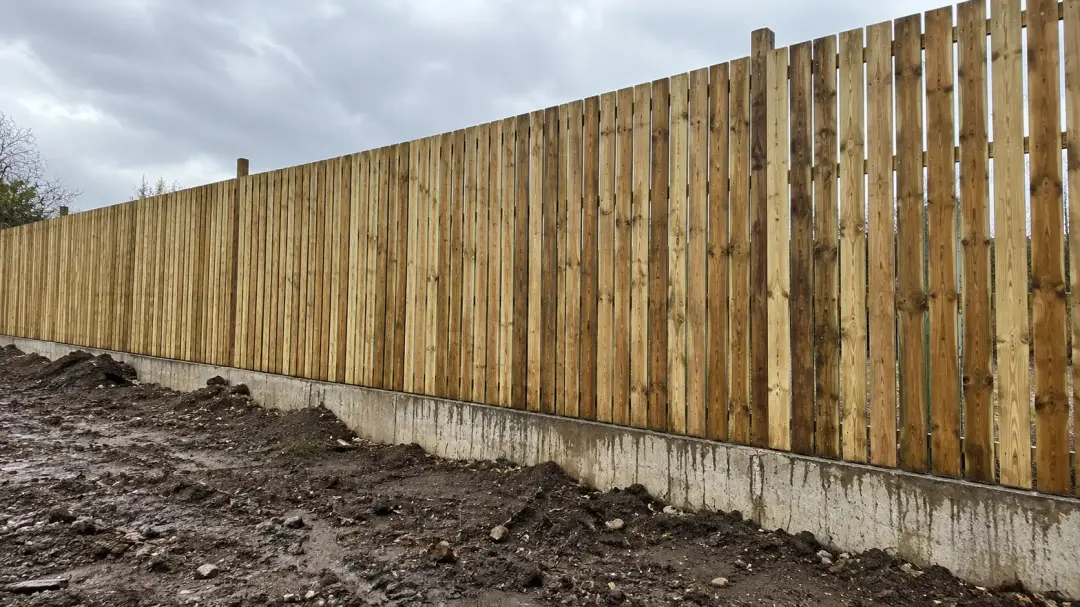
Why Businesses Choose Close Board Fencing
Businesses choose close board fencing because it provides a solid, private and clearly defined boundary around commercial premises. The overlapping boards make it useful for screening service areas, stock, bins and equipment from neighbouring properties or public spaces. It can also help discourage casual access by creating a more substantial physical barrier than open fencing styles
Close board fencing is flexible enough to suit offices, warehouses, schools, retail premises and industrial sites. Different heights, post types and finishes can be selected according to the location.
Individual damaged boards can often be replaced without removing an entire section. This can make repairs straightforward where vehicles, equipment or weather cause localised damage. The fence can also be adapted to sloping or uneven ground. For businesses wanting a combination of privacy, appearance and practical boundary control, close board fencing provides a versatile timber solution.
Close Board Fencing for Commercial Boundaries
Close board fencing can create a strong and clearly defined perimeter around commercial properties. It is particularly useful where businesses need to separate their land from neighbouring premises, public paths or shared access areas. The solid timber construction provides a more substantial boundary than decorative open fencing. This can make it easier to identify where the commercial property begins and ends. Fence height should be selected according to privacy, security and visibility requirements. Taller fencing may be useful along rear or side boundaries, while lower sections can be more appropriate near entrances or areas where drivers need clear sightlines.
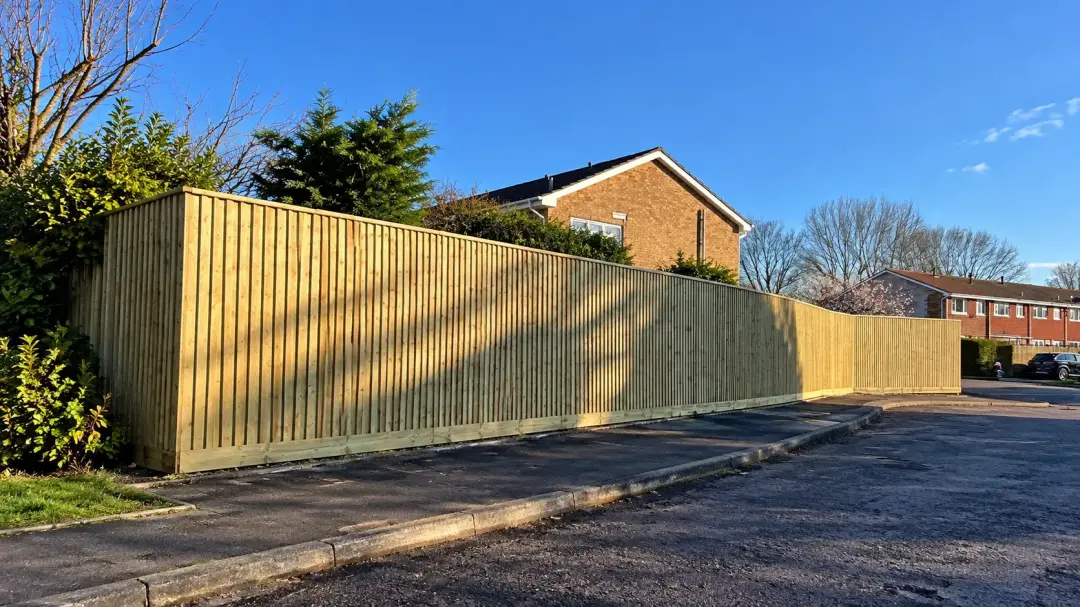
Post strength is important because commercial fence runs can be long and may experience significant wind loading. Concrete posts can provide durable support, while timber posts create a consistent wooden appearance.
Gravel boards can help protect the lower timber from damp ground, vehicle spray and maintenance equipment. The fence line should also be planned around gates, loading areas and pedestrian routes.
Regular inspection is useful on busy sites because local damage can develop around corners or access points. When correctly planned, close board fencing can provide commercial properties with a durable perimeter that supports privacy, site organisation and clear boundary control.
Improving Privacy Around Business Premises
Close board fencing can improve privacy by reducing direct views into commercial premises from surrounding roads, paths and neighbouring properties. The overlapping boards create a solid visual screen. This can be useful where staff areas, outdoor storage or operational activity would otherwise remain exposed. Fence height has a major influence on privacy.
Taller sections can provide additional screening where appropriate. However, visibility around entrances and vehicle access points should not be unnecessarily restricted. Businesses may also use close board fencing around specific areas rather than enclosing the entire site at the same height. This can provide targeted screening while keeping customer-facing sections more open.
The timber finish can be selected to suit the appearance of the building and wider site. Professional planning helps balance privacy with access, visibility and the overall appearance of the premises.
Using Close Board Fencing to Improve Security
Close board fencing can support commercial security by creating a solid physical boundary that discourages casual access and reduces visibility into parts of the site. The overlapping boards make it harder to see stock, equipment and service areas from outside.
Fence height can increase the sense of enclosure. However, close board fencing should be considered one part of a wider security approach rather than a specialist anti-intrusion system. Strong posts, rails and fixings are essential because the security of the boundary depends on the complete structure. Damaged boards should be repaired quickly so they do not create weak points. Gates are equally important.
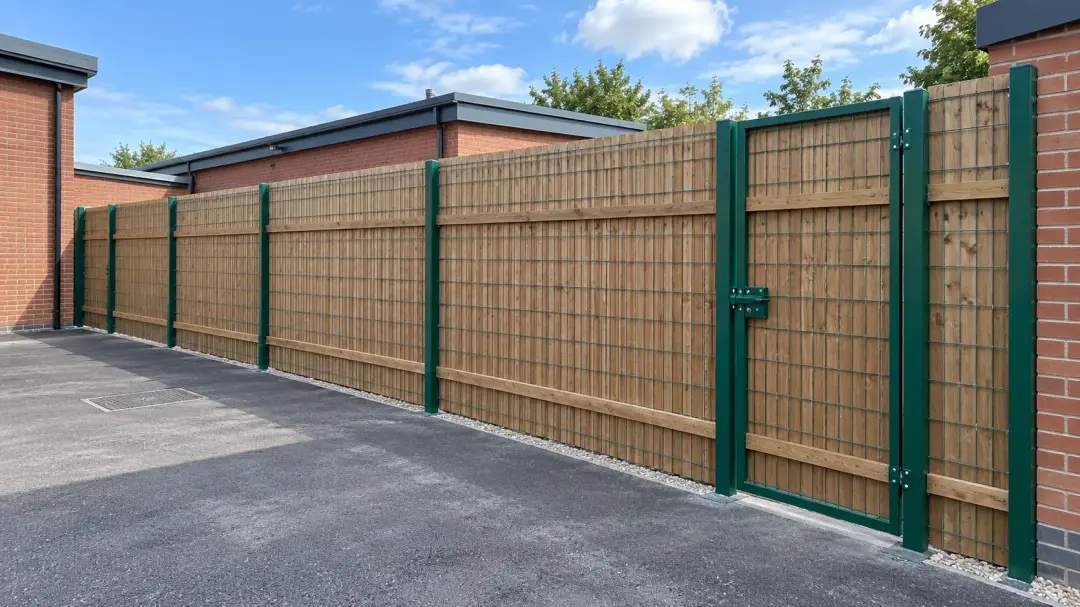
A strong fence provides limited benefit if vehicle or pedestrian entrances are left unsecured. Suitable locks, access controls and closing arrangements can therefore be combined with the fence.
Lighting and CCTV may also support security around important boundaries. Vegetation should be managed so it does not hide damage or create concealed access points.
The layout should consider public entrances, staff areas and restricted sections separately. For many businesses, close board fencing offers useful day-to-day boundary protection and privacy. Where higher levels of security are required, metal or specialist security fencing may be more appropriate for some areas.
Close Board Fencing for Offices
Office properties can use close board fencing around rear boundaries, staff parking areas, bin stores and service zones. These parts of the site often require more privacy than the main customer-facing entrance. Close board fencing can hide waste containers, maintenance areas and outdoor equipment from public view. It can also create a clear division between office land and neighbouring properties.
The finish can be selected to complement the building and landscaping. Lower fencing may be suitable near public areas, while taller sections can provide greater screening behind the building. Pedestrian and vehicle access should be planned carefully.
Matching timber gates can provide a consistent appearance. Concrete posts and gravel boards may be useful where lower maintenance and durability are priorities. For offices where appearance remains important, close board fencing can provide practical screening without creating the heavily industrial look associated with some metal security systems.
Close Board Fencing for Warehouses
Warehouses can benefit from close board fencing around perimeter boundaries, storage areas, staff spaces and less visible parts of the site. The solid construction can help screen stock, pallets and operational areas from neighbouring properties or public routes. Warehouses often have large external areas, so fencing layout should be planned carefully around vehicle movements. Loading bays, delivery routes and gates need sufficient clearance for vans and lorries. Fence sections near junctions should not obstruct important visibility. The boundary can also help distinguish pedestrian areas from vehicle zones. Close board fencing may be particularly useful around staff break spaces where additional privacy is desirable.
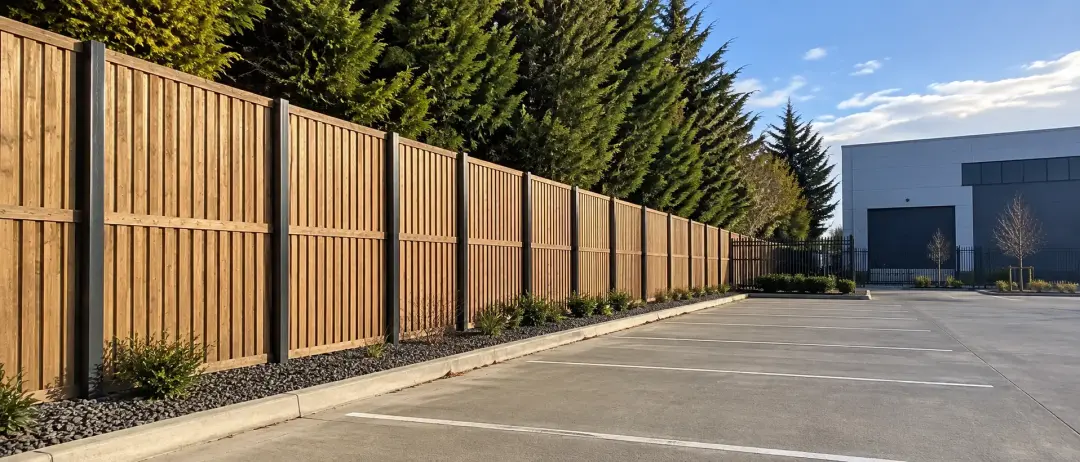
Durability is important because warehouse environments can expose fencing to forklifts, trolleys and other equipment. Concrete posts and gravel boards can provide additional resilience at ground level.
Damaged boards can often be replaced individually after minor impacts. The fence height should reflect the location. Tall screening may be suitable along rear boundaries, while entrances may require lower or more open arrangements.
Businesses should also consider whether specialist metal fencing is needed around areas with higher security requirements. Where privacy and straightforward boundary control are the main priorities, close board fencing provides warehouses with a practical timber option that can be adapted around large commercial sites.
Close Board Fencing for Industrial Sites
Industrial sites can use close board fencing where privacy, screening and ordinary boundary control are more important than specialist high-security performance. The fence can conceal plant, materials and service areas from public view. It may also separate different sections within the site. Strong posts are especially important because industrial boundaries can be long and exposed.
Concrete posts can provide durable support where the site experiences regular traffic or harsh conditions. Vehicle routes should be planned before installation. Fence lines should not interfere with turning areas or loading operations.
Areas near heavy machinery may require additional protection from accidental impact. Where security risks are higher, specialist metal fencing may be preferable. Close board fencing is therefore most suitable for industrial locations where a solid visual screen and practical perimeter are required without the need for a dedicated anti-climb or high-security system.
Close Board Fencing for Retail Properties
Retail properties can use close board fencing around delivery areas, bin stores, staff parking and rear service zones. These spaces often need screening because they are functional rather than customer-facing. A solid timber boundary can keep waste containers, stock handling and maintenance areas less visible from shoppers or neighbouring properties. Close board fencing can also separate customer-accessible areas from staff-only sections. The fence design should reflect the appearance of the wider retail site. Timber staining or painting can help it coordinate with other exterior features. Gates can provide controlled access for deliveries or employees.
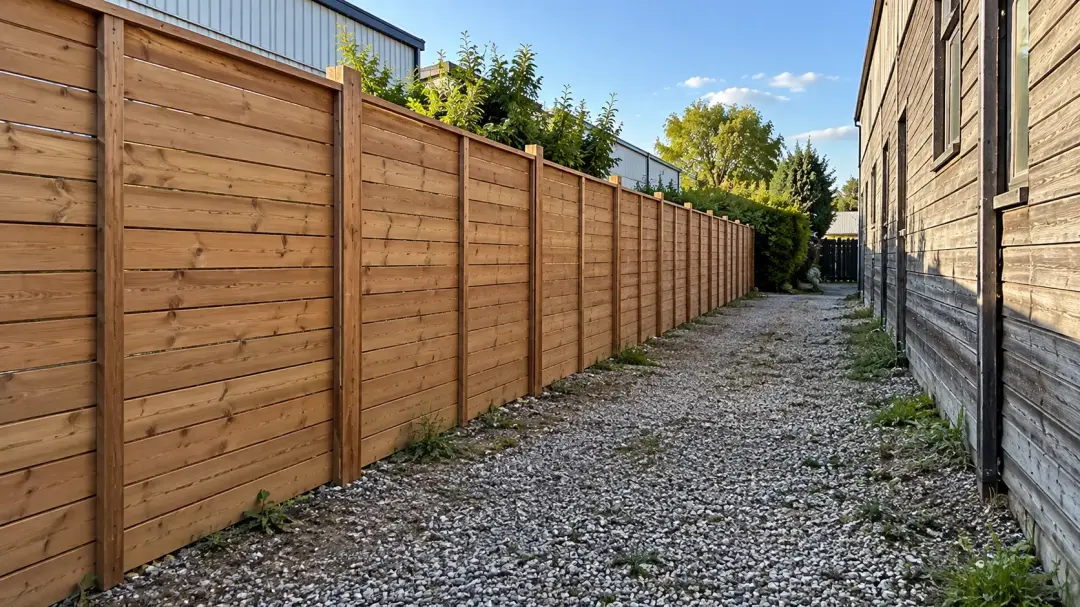
Vehicle movements require careful planning. Fence sections should not block drivers' visibility around loading areas or exits. Because retail sites may experience frequent daily activity, posts and fixings should be strong enough to cope with normal knocks and vibration.
Damaged boards should be repaired promptly to maintain appearance. The fence can also be useful around external plant or equipment.
Concrete gravel boards may help protect the lower section from trolleys and general site wear. For retail businesses wanting a neat way to screen back-of-house areas, close board fencing provides a practical boundary that can be adapted to different layouts.
Close Board Fencing for Schools and Nurseries
Schools and nurseries can use close board fencing where privacy and clear boundary definition are important. Solid fencing can reduce direct views into outdoor play areas from neighbouring paths or properties. It can also help children understand where supervised areas begin and end. Fence height and construction should suit the intended use.
Gates need secure latches and appropriate access arrangements. Timber should remain free from splinters, protruding fixings and damaged boards. Regular inspections are therefore important. Close board fencing should not be treated as a specialist safety barrier without assessing the requirements of the site. However, it can provide a useful enclosed boundary around many educational properties.
Concrete posts and gravel boards may offer additional durability in frequently used areas. A professional installer can help design the fencing around pedestrian gates, staff access and outdoor spaces while maintaining privacy and clear site organisation.
Close Board Fencing for Car Parks
Close board fencing can define the edges of commercial car parks and provide screening between parking areas and neighbouring properties. It can also hide vehicles from certain viewpoints where privacy or appearance is a concern. The fence should be planned carefully around vehicle sightlines. Solid fencing placed too close to entrances, corners or junctions can obstruct views of pedestrians or other vehicles. Lower sections may therefore be required in some locations. Posts should be positioned where accidental vehicle impacts are less likely. Kerbs, bollards or other protective measures may be considered in vulnerable areas.
Concrete posts and gravel boards can be particularly useful because car parks expose fencing to road spray, grit and ground-level impacts. Close board fencing may also separate staff parking from service areas. Pedestrian routes should remain clearly accessible.
Gates need enough width for the vehicles using the site. The fence finish can be chosen to suit the commercial property and surrounding landscape. Regular inspection is important because vehicle contact can loosen boards, rails or posts.
Repairs should be completed promptly to keep the boundary safe and presentable. With careful positioning, close board fencing can provide privacy and clear separation around commercial parking areas without interfering with normal traffic movement.
Close Board Fencing Around Storage Areas
Outdoor storage areas often need screening from customers, neighbouring businesses or public routes. Close board fencing can create a solid visual boundary around these spaces. This can help keep pallets, materials and equipment less visible. The fence height should reflect the size of the stored items and the surrounding site.
Access gates need to be wide enough for normal handling equipment. Where forklifts or vehicles operate nearby, posts may need additional protection from impacts. The fence itself does not replace secure storage procedures. Valuable items may still require locked buildings, cages or other security measures.
Concrete posts and gravel boards can improve durability in active storage environments. Regular checks should identify broken boards or damaged rails quickly. For businesses where the main aim is screening and boundary definition, close board fencing can provide a straightforward way to organise and enclose outdoor storage areas.
Close Board Fencing Around Bin Stores
Close board fencing is frequently used around commercial bin stores because it can hide waste containers from public view while creating a clearly defined service area. This can improve the appearance of offices, retail properties, schools and other commercial premises. The enclosure should be large enough for all bins to be moved conveniently.
Gates need suitable width and should open in a direction that does not obstruct access. Waste collection staff also need straightforward entry. Ventilation should be considered because completely enclosing waste areas can create unpleasant conditions. The timber may be exposed to moisture, spills and regular contact from heavy bins. Concrete gravel boards can help protect the lower section.
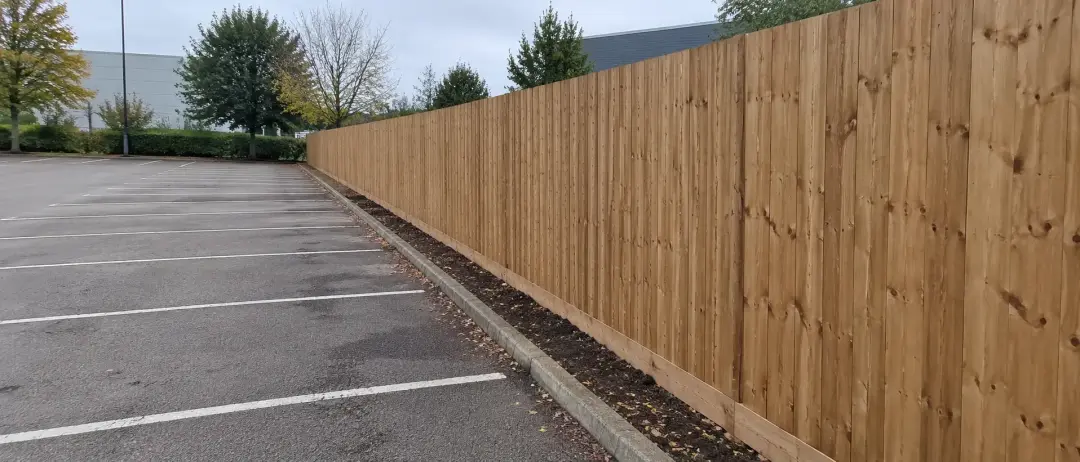
Strong posts and fixings are useful where gates and bins create repeated impacts. The fence finish should also allow straightforward cleaning.
Damaged boards can often be replaced individually if bins strike them. The surrounding ground should drain effectively so water does not remain against the timber.
Where the bin store sits beside a public area, a solid close board enclosure can significantly reduce visual clutter.
Professional planning can make the structure practical for staff and collection teams while maintaining a cleaner appearance across the wider commercial property.
Close Board Fencing for Service Yards
Service yards can benefit from close board fencing where businesses want to screen deliveries, waste storage and operational activity from surrounding areas. The solid construction creates a clear boundary. It may also help separate the service yard from customer or staff spaces. Vehicle access is an important consideration.
Gates should be wide enough for delivery vehicles and positioned to allow practical turning. Fence sections near entrances should not obstruct necessary visibility. Because service yards can be busy, posts and lower sections may be vulnerable to impact. Concrete components can provide additional durability. Close board fencing can also screen equipment or temporary storage.
However, areas requiring higher security may need additional measures. Routine inspection is important because local damage can occur through vehicle movements. A well-planned close board boundary can make service yards look tidier while keeping operational activity clearly separated from public-facing parts of the property.
Separating Staff and Public Areas
Close board fencing can help businesses create a clear physical separation between staff-only areas and spaces used by customers, visitors or the general public. This can support better site organisation and reduce accidental access into working zones. The solid construction provides a more obvious barrier than low decorative fencing. It can be used around staff parking, outdoor break areas, service yards or maintenance spaces. Pedestrian gates can provide controlled entry for employees. The position of the fence should follow natural movement around the site. Public routes should remain obvious and easy to use. The fence should not create hidden corners that make navigation confusing.
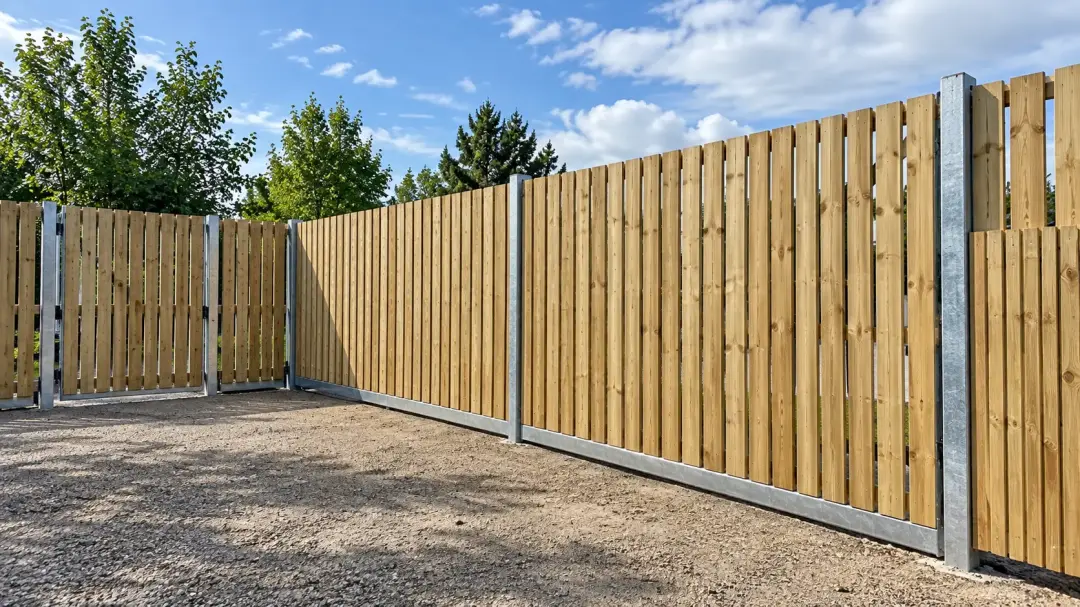
Signage can also help identify staff-only entrances. Fence height can vary depending on the level of privacy required. For example, an outdoor staff seating area may benefit from greater screening than a simple service corridor.
Matching gates should close securely and remain convenient for regular use. Where emergency escape routes cross the boundary, gate design needs appropriate consideration.
The finish can be chosen to coordinate with the commercial property. Close board fencing therefore provides businesses with a practical way to create clear zones across a site while keeping restricted or staff areas less visible to the public.
Creating Clear Property Boundaries
Commercial properties benefit from clearly defined boundaries because they make ownership, maintenance responsibility and site organisation easier to understand. Close board fencing provides a strong visual and physical division.
Before installation, the actual boundary line should be confirmed. Existing fencing may not always follow legal property boundaries precisely. Neighbouring businesses or landowners may need to be consulted where the proposed fence sits directly between properties. The fence height and route should also account for access points. Vehicle gates, pedestrian entrances and shared routes need to remain practical.
Ground conditions can influence post positioning. Regular maintenance helps preserve the boundary once installed. Damaged or leaning sections should be repaired before they create gaps or uncertainty. A professional installer can measure the site and plan the fence line carefully. Clear commercial boundaries can improve privacy, security and the overall organisation of business premises.
Screening Equipment and Outdoor Storage
Close board fencing can provide effective visual screening around outdoor equipment and storage areas. Businesses may use it to hide air conditioning units, pallets, machinery, materials or maintenance equipment from public view. The solid overlapping boards block direct sightlines more effectively than open fencing. Fence height should be selected according to the items being screened. Access still needs to remain practical for maintenance or stock handling. Gates or removable sections may be required for larger equipment. Ventilation is another important consideration. Mechanical equipment should not be enclosed so tightly that airflow is restricted.
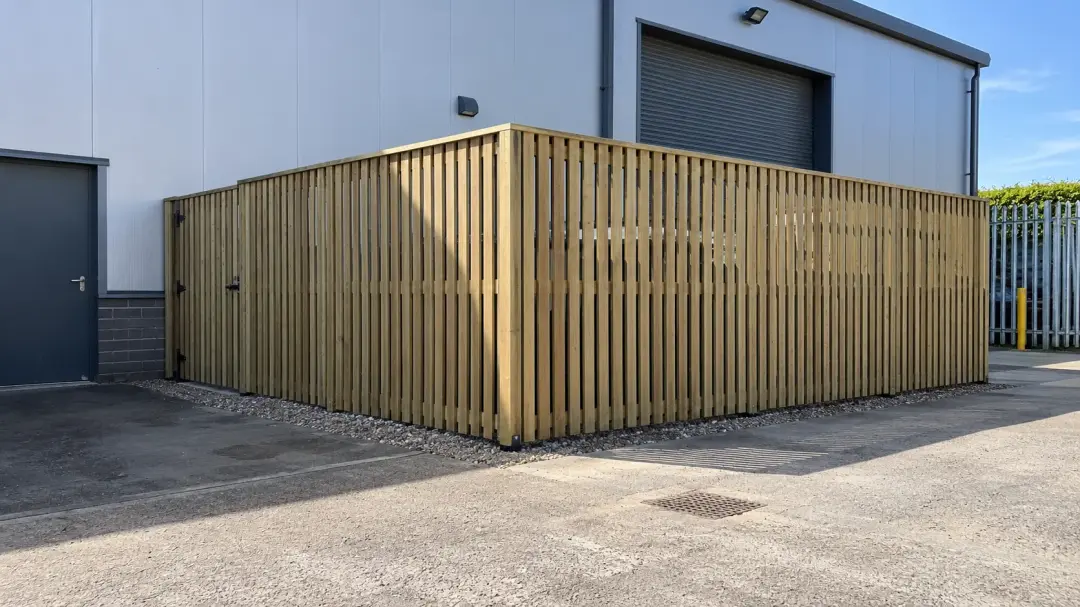
Safe working clearances also need to be maintained around machinery and electrical installations. The fence should therefore be positioned according to the requirements of the equipment, not simply as close as possible.
Concrete posts and gravel boards can provide a robust structure around active service areas. The timber finish can help the screening blend into landscaping or the wider building exterior. Regular maintenance keeps the enclosure looking presentable.
If equipment needs to be replaced in future, the fence design should allow sufficient access. With careful planning, close board fencing can improve the appearance of commercial premises by keeping functional outdoor equipment and storage less visible without preventing necessary maintenance or operation.
Reducing Views into Restricted Areas
Close board fencing can reduce views into restricted commercial areas by creating a continuous solid screen. This can be useful around plant spaces, storage zones and staff-only sections. Limiting visibility can also reduce unnecessary attention towards valuable equipment or stock. Fence height should reflect the surrounding ground levels and nearby viewpoints.
However, very tall fencing may require stronger structural support. Businesses should also consider whether complete visual screening could create hidden areas that become harder to monitor. CCTV or lighting may therefore form part of the wider security plan. The fence itself should remain in good repair.
Gaps caused by broken or warped boards can reduce screening. Access gates should use a similar solid design where privacy is important. Close board fencing provides useful visual protection for many restricted areas, although higher-risk sites may need specialist security measures alongside or instead of timber fencing.
Choosing the Right Fence Height
Choosing the correct height for commercial close board fencing requires balancing privacy, security, appearance and visibility. Different areas of the same property may need different fence heights. Rear and side boundaries can often use taller fencing where screening is important. Entrances, car parks and road-facing areas may require lower sections to maintain sightlines.
Ground levels should also be considered. A fence installed beside raised neighbouring land may provide less privacy than expected. Taller fences experience greater wind loading, so post strength becomes increasingly important. The appearance of the premises matters as well.

Very high solid fencing can make a customer-facing site appear unnecessarily enclosed. Planning restrictions may affect the height or location of certain commercial boundaries. These should be checked before installation begins.
Businesses should also consider what is being screened. A bin store may need only enough height to hide containers, while an outdoor storage area could require more.
Matching gates should usually coordinate with the surrounding fence. Professional site assessment can help determine where heights should change across the property. Selecting the right arrangement allows the business to achieve useful privacy and boundary protection without creating unnecessary visibility or structural problems.
MD Fencing & Decking provides professional close board fencing across Milton Keynes and Buckinghamshire, offering strong, private and long-lasting fencing for homes, gardens and commercial properties. Our team installs, repairs and replaces close board fencing to suit a wide range of outdoor spaces and requirements.