
If you are installing decking in your garden, you may ask: how high can a deck be before you need a railing? This is an important question, as the height of your deck directly affects safety, planning requirements, and how the structure should be built. In the UK, there are clear building regulations that help homeowners ensure their decking project is safe for people using the space.
Why Deck Height Matters For Safety
The height of a deck is one of the main factors that determines whether railings or a balustrade are required. Even a low level deck can pose a risk if the surface becomes slippery over time, especially during wet weather. As the deck gets higher above ground level, the risk of a fall increases, making safety features essential.
For families with children, this becomes even more important. A higher deck without proper support or protection can quickly become dangerous. Installing a railing or balustrades helps prevent accidents and gives peace of mind when people use the space.
It is always best to plan for safety early in your decking design, rather than trying to add features later once the deck has already been built.

Should I Have A Decking Balustrade
When you install a new deck, you want to ensure that the design and construction are not only safe for your family but meet UK building regulations. As the deck surface can become slippery during the rainy and winter months, the ground level of the deck floor can become a health hazard.
Installing a decking balustrade or railing is becoming a popular option, and it can be done to help you save cost over time by avoiding future changes. There are some construction and regulation points you need to keep in mind before installing a deck railing, such as the platform height, structure support, and load requirements.
Deck railings are now more than just a safety feature. Many homeowners choose them to improve the look of their decking area. Glass, metal, and wood designs can all be used to match the style of your home while still providing the protection required.
Understanding Deck Height And Regulations
In the UK, building regulations are used to ensure that any decking project is safe and suitable for use. A key rule to remember is that once your deck is more than 300mm above ground level, safety measures such as railings or balustrades are usually required.
This minimum height is important because it marks the point where a fall could cause injury. For decks built at or below this low level, railings may not be needed, but you should still think about safety depending on how the space will be used.
For higher structures, the railing height must meet specific standards. In most domestic settings, the railing should be at least 900mm high. In commercial settings, this increases to 1100mm to provide extra protection where more people may use the area.
Deck Terminology
Understanding the terminology used in decking construction will help you make better decisions during your project and communicate clearly with contractors.
Balusters
Balusters are vertical posts placed between the handrail and the deck surface. They are designed to stop people from falling through gaps and are especially important for child safety.
Guard Rails
Guard rails run horizontally along flat sections of the deck. While similar to railings, they are often defined slightly differently in building regulations but serve the same purpose of protection.
Grade
Grade refers to the ground level around the deck.
A deck built above grade means it is raised above the surrounding ground.
Rise
Rise is the vertical distance between each step on stairs, while the tread is the flat part you step on.
handrails
A handrail is the part people hold onto when using stairs, while the railing or balustrade provides overall edge protection.

Low Level And High Level Decking
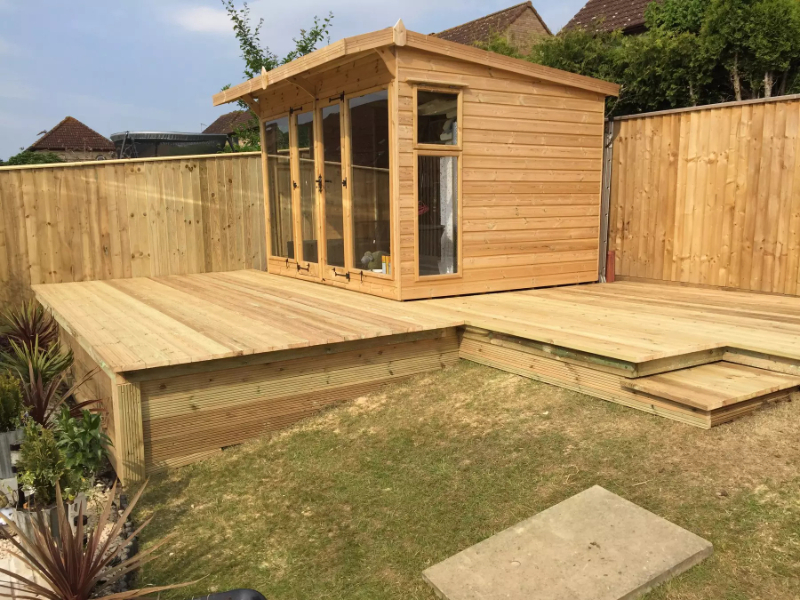
Low level decking, sometimes called ground level decking, is usually built close to the ground and often does not need planning permission. These decks are easier to install and cost less, but they still need to be designed carefully to ensure proper drainage and support.
High level decking, on the other hand, requires more planning and stronger construction. The structure must be designed to support weight safely and prevent movement over time. Posts must be set securely into the ground, and the frame must be strong enough to handle regular use.
As the height increases, the need for railings, handrails, and balustrades becomes more important. High level decks must follow stricter building regulations to reduce the risk of falls.

What Height Does My Decking Railing Need To Be In The UK
Despite being decorative, your decking railings must follow certain UK building regulations. The exact railing height depends on how high the deck is from the ground.
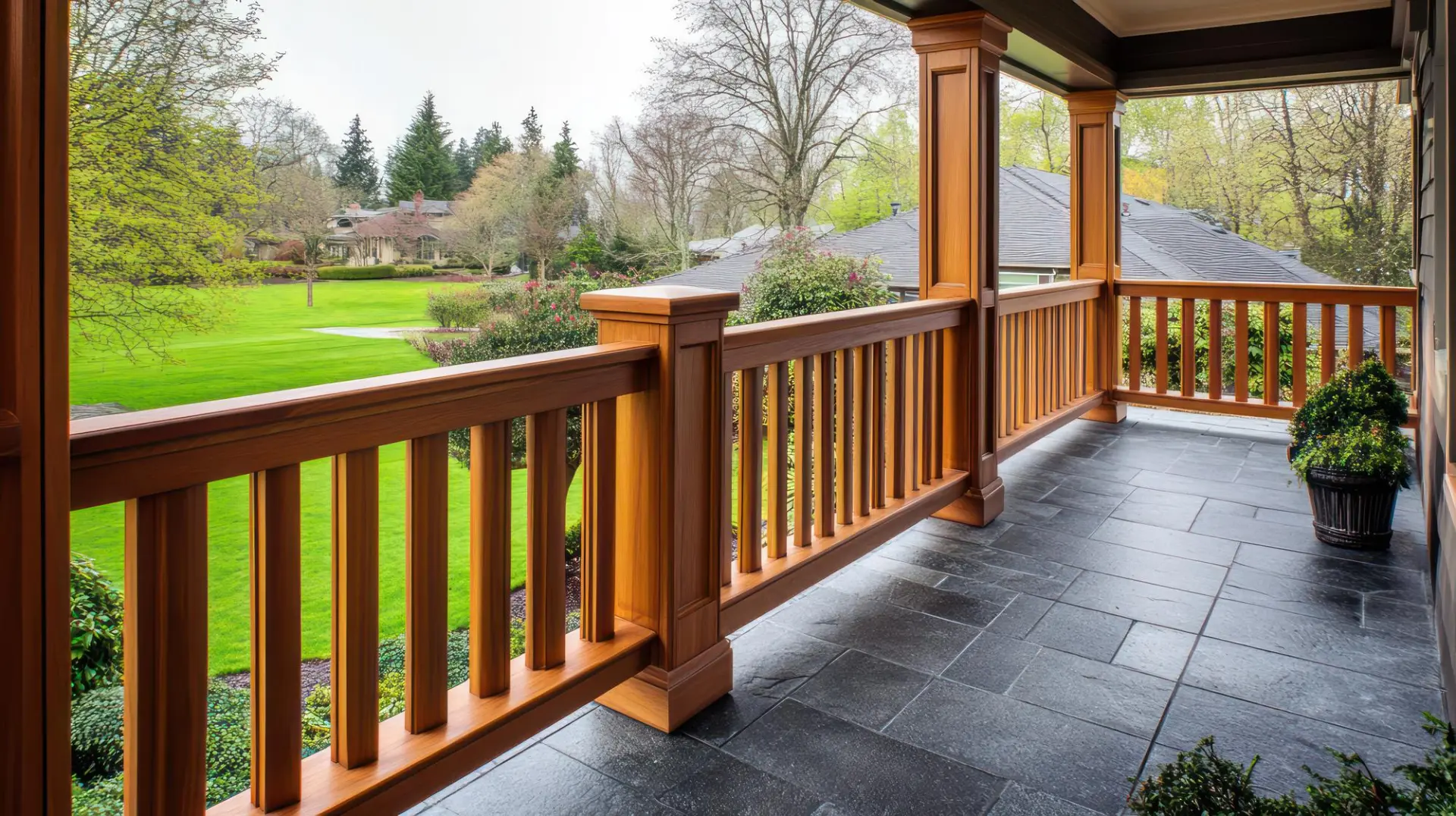
For decks above 300mm, a balustrade is required. In domestic properties, this should be at least 900mm high. For commercial projects, the minimum height increases to 1100mm.
Spacing is also important. Gaps between balusters should not allow a 100mm sphere to pass through. This rule is designed to protect children and prevent accidents.
If your decking includes stairs, additional rules apply. Handrails must be fitted and positioned at a comfortable height to support people as they move up and down the steps.
Do My Deck Stairs Need Railings
Stairs are a key part of many decking designs, and they come with their own safety requirements. If your deck includes more than two steps, a handrail is usually required.
For wider stairs, especially those over one metre, handrails should be installed on both sides. This helps provide balance and support for everyone using the stairs.
The height of the handrail is also important. It should be set at a comfortable level, typically around 900mm, measured from the step. This ensures it is easy to use for most people.


Planning Permission And Site Considerations
Before starting any decking project, it is important to check whether planning permission is required. In many cases, low level decking does not need approval, but this can change depending on the size, height, and location of the structure.
If your deck is built higher than 300mm or covers a large area, you may need permission from your local authority. It is always best to check early to avoid delays or extra cost later.
You should also consider the site conditions. Uneven ground, soil type, and drainage can all affect how your deck is built. Proper planning ensures the structure remains safe and stable over time.
Choosing The Right Materials For Your Deck Railing
The materials you choose will affect both the look and safety of your deck. Wood is a popular choice for its natural appearance, but it does require regular maintenance.
Composite materials are becoming more common as they are durable and require less upkeep. Metal options such as aluminium or stainless steel provide strong support and a modern design.
Glass panels are often used in balustrades to create a clean and open look, especially for high level decking where views are important.
Whatever material you choose, it must be installed correctly to ensure it meets safety requirements and provides long term support.
Decking Height for Railing
When deciding how high a deck can be before you need a railing, the key factor is safety. In the UK, once your deck is above 300mm from ground level, railings or a balustrade are usually required to meet building regulations.
Taking the time to plan your decking project properly will help you avoid issues later. By understanding height requirements, choosing the right materials, and ensuring proper construction, you can build a safe and attractive outdoor space for everyone to enjoy.
Are you looking for garden decking or composite decking near you? If you require garden decking in Milton Keynes, Buckinghamshire contact us today. Our garden design experts can supply and install beautiful garden decking for you and your family to enjoy for years to come.